

Rings that mark love and commitment are more than just jewelry. They carry deep emotional meaning and often become part of your daily life. Many people ask the same question when they receive more than one ring: What is the correct order to wear engagement, wedding, and eternity rings? The answer depends on tradition, comfort, culture, and personal preference.
This guide will help you understand the meaning of each ring, the traditional order, modern variations, and how to choose the best arrangement for your lifestyle.
Whether you are newly engaged, planning your wedding, or celebrating an anniversary with an eternity ring, this guide will make everything clear.
Understanding the Three Rings
Before deciding the order, it helps to understand what each ring represents and when it is usually given.
Engagement Ring
The engagement ring is typically given during a proposal. It is a symbol of intention to marry and commitment to a future together. This ring often features a center stone, such as a diamond or gemstone, and is usually the most eye-catching of the three.
People normally wear the engagement ring on the ring finger of the left hand in many Western countries. This tradition comes from the ancient belief that a vein in this finger leads directly to the heart.

Wedding Ring or Wedding Band
The wedding ring is exchanged during the wedding ceremony. It represents the official bond of marriage and lifelong partnership. Wedding bands are often simpler in design than engagement rings, though styles can vary from plain metal bands to diamond-set designs.
This ring is usually worn every day and is meant to be durable and comfortable.

Eternity Ring
An eternity ring is often given after the wedding to mark a special milestone. This can include anniversaries, the birth of a child, or another meaningful moment. Eternity rings are known for having stones set all the way around or across the top of the band, symbolizing never-ending love.
Unlike engagement and wedding rings, eternity rings do not have a fixed time for gifting. Some people receive one shortly after marriage, while others get one years later.

The Traditional Order of Rings
The most common traditional order is based on symbolism and ceremony.
From Bottom to Top on the Finger
When worn on the same finger, the traditional order from the base of the finger upward is:
-
Wedding ring
-
Engagement ring
-
Eternity ring
This means the wedding band sits closest to your heart, followed by the engagement ring, and then the eternity ring on top.
Why the Wedding Ring Goes First
During the wedding ceremony, the wedding ring is placed on the finger first. The engagement ring is often temporarily moved to the right hand so the wedding band can be placed closest to the heart. After the ceremony, the engagement ring is placed back on top of the wedding ring.
This tradition reflects the idea that marriage is the foundation of the relationship, with the engagement ring symbolizing the promise that led to it.
Adding the Eternity Ring
When an eternity ring is added later, it usually goes on top of both the wedding and engagement rings. This placement highlights the new milestone being celebrated and keeps the original order intact.
Modern Ring Wearing Options
While tradition is meaningful, modern couples often choose what feels best for them. There is no strict rule that everyone must follow.
Wearing an Engagement Ring First
Some people prefer to wear the engagement ring closest to the heart, especially if the design fits better that way. This is more common when the engagement ring and wedding band are designed to fit together as a set.
Wearing an Eternity Ring Between Bands
Another popular option is placing the eternity ring between the wedding band and the engagement ring. This can create a balanced look and help protect delicate stones on the eternity band.
This order would look like this from bottom to top:
-
Wedding ring
-
Eternity ring
-
Engagement ring
Many people like this arrangement because it frames the eternity ring nicely and keeps it secure.
Stacking Rings Across Both Hands
Some people choose not to stack all three rings on one finger. You might wear the wedding and engagement rings on your left hand and place the eternity ring on your right hand. This is common when the combined stack feels too bulky or uncomfortable.
This approach also allows each ring to stand out on its own.

Cultural Differences in Ring Placement
Ring traditions vary around the world. Knowing these differences can help you understand why some people wear rings differently.
Left Hand vs Right Hand
In many Western countries such as the United States, the United Kingdom, and Canada, rings are worn on the left hand ring finger. However, in countries such as Germany, Russia, India, and Norway, wedding rings are often worn on the right hand.
Engagement rings may also follow this pattern depending on local customs.
Religious Traditions
Some religious traditions influence ring placement. In certain cultures, the wedding ring is moved from one hand to another during the ceremony. Others may prioritize the wedding band over decorative rings.
Always remember that cultural practices are meaningful but not mandatory unless you choose to follow them.
How to Choose the Best Order for You
The best ring order is one that suits your comfort, style, and daily routine.
Consider Comfort and Fit
If your rings rub against each other or feel tight when stacked, you may want to adjust the order or spread them across both hands. Rings with sharp edges or raised stones can cause irritation if placed incorrectly.
Try wearing your rings in different combinations to see what feels best.
Think About Daily Activities
If you work with your hands or have an active lifestyle, bulky ring stacks may not be practical. You might choose to wear only your wedding band daily and save the engagement and eternity rings for special occasions.
Some people also switch to a simpler band during workouts or manual tasks.
Match the Design Styles
Rings with matching metals and similar designs often stack more smoothly. If your eternity ring has stones all around the band, placing it on top can help prevent scratching on other rings.
Curved or contoured bands are often designed to fit together in a specific order, so follow the jeweler’s recommendations when possible.
Common Ring Stacking Styles
Ring stacking has become a fashion trend, and many people enjoy experimenting with different looks.
Classic Stack
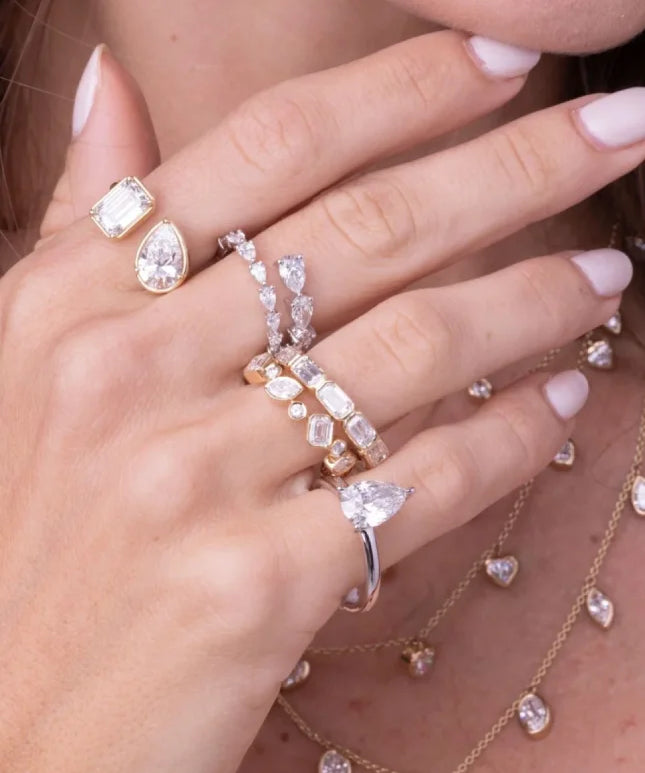
This includes a simple wedding band, a solitaire engagement ring, and a delicate eternity ring on top. It creates a timeless and elegant appearance.
Balanced Stack
In this style, the engagement ring sits in the middle, with a wedding band below and an eternity band above. This creates symmetry and makes the center stone stand out.
Minimalist Stack
Some prefer thin bands and subtle stones. A slim wedding band, a small engagement ring, and a fine eternity band create a soft and modern look.
Statement Stack
For those who love bold jewelry, thicker bands and larger stones can create a striking stack. In this case, comfort becomes especially important.

Should You Always Wear All Three Rings Together?
There is no requirement to wear all three rings every day.
Special Occasions Only
Many people choose to wear their eternity ring only on anniversaries or formal events. This helps preserve the stones and reduces daily wear.
Everyday Simplicity
Wearing only the wedding band during daily activities is common. It is practical and still represents your commitment.
Travel Considerations
When traveling, especially to busy cities or unfamiliar places, some people leave expensive rings at home and wear a simple band instead.
Caring for Your Rings
No matter how you wear your rings, proper care is important to keep them looking beautiful.
Regular Cleaning
Clean your rings regularly using mild soap, warm water, and a soft brush. This removes dirt and oils that can dull the stones.
Professional Checkups
Have your rings checked by a jeweler at least once a year. This helps ensure stones are secure and bands are not worn down.
Safe Storage
When not wearing your rings, store them in a soft pouch or jewelry box with separate compartments. This prevents scratches and damage.
Creating Your Own Ring Tradition
Your relationship is unique, and your rings can reflect that. Some couples create their own traditions, such as adding a new band for each major anniversary or redesigning older rings into new styles.
You might also choose to engrave special dates or messages inside your bands to make them even more personal.
Conclusion
The order of engagement, wedding, and eternity rings may follow tradition, but it ultimately comes down to what feels right for you. Traditionally, the wedding ring is worn closest to the heart, followed by the engagement ring and then the eternity ring. However, modern styles and personal preferences have opened the door to many creative and comfortable options.
Whether you choose to stack all three rings on one finger, spread them across both hands, or wear only one at a time, the most important thing is the meaning behind them. These rings represent love, commitment, and shared memories. Wear them in a way that brings you joy and fits your lifestyle.
If you are unsure, try different arrangements and see what looks and feels best. There is no single correct answer, only the one that works best for you and your story.
By understanding tradition and embracing personal choice, you can confidently wear your engagement, wedding, and eternity rings in a way that truly reflects your love.

Common Questions About Ring Order
Can I Wear My Engagement Ring After Marriage?
Yes, absolutely. Most people continue wearing their engagement ring after marriage, usually stacked with the wedding band.
Is It Wrong to Wear Rings in a Different Order?
There is no wrong order. Traditions offer guidance, but personal comfort and style matter more.
What If My Rings Do Not Stack Well?
If your rings do not fit together nicely, consider wearing one on another finger or hand. You can also ask a jeweler about resizing or custom fitting options.
Can Men Wear Eternity Rings?
Yes. Eternity rings are not limited by gender. Anyone can wear them to celebrate love and milestones.